
Fermented Foods: From Tradition to Trend
 Where delicious meets nutritious.
Long before fermented foods became a wellness trend, they were simply part of life in my family’s kitchen.
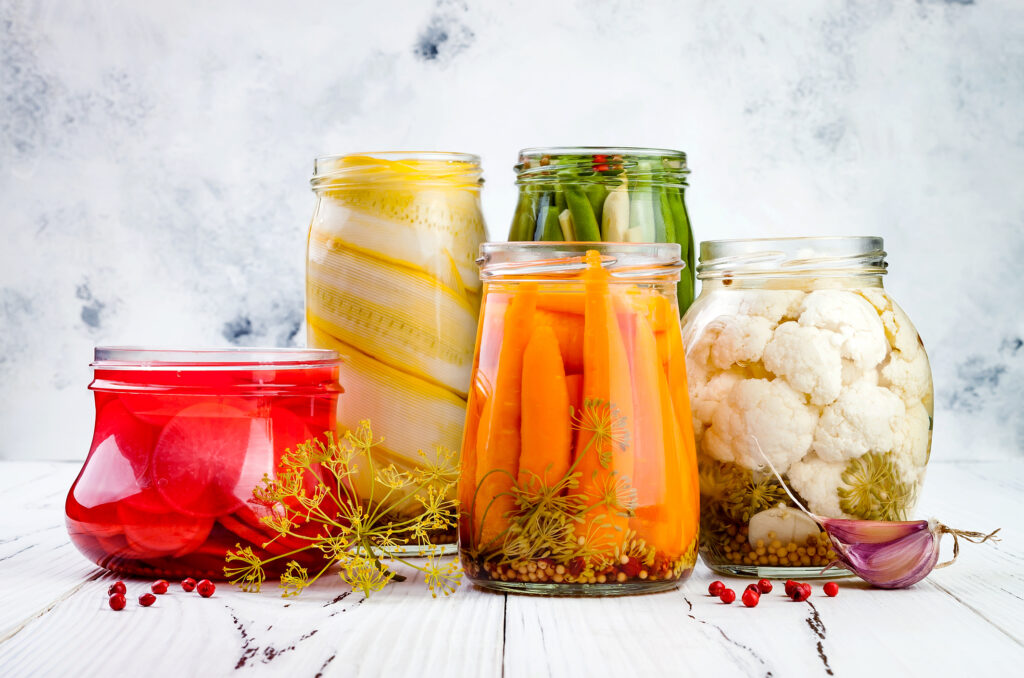
When I was a teenager in the Philippines, my mother and I made atchara together—a sweet-and-sour relish traditionally made with green, unripe papaya and colorful vegetables. We would grate the papaya into long, thin strips, add carrots and other vegetables for color and crunch, and prepare a tangy mixture with vinegar, ginger, garlic, and a little sweetness.
I can still remember working beside her in the kitchen. We made sweet and salty pickled cucumbers, too. And because German delicatessens were difficult to find at the time, my mother even made her own sauerkraut and ground and stuffed her own sausages. Food preservation was something she understood well—she taught classes on preservation techniques at her cooking school in the Philippines.
At the time, of course, I wasn’t thinking about the microbiome, probiotics, or gut health. We were preparing food the way generations before us had done. Today, science is giving us a fascinating new appreciation for some of these very old traditions.
Why Is Everyone Talking About Fermented Foods?
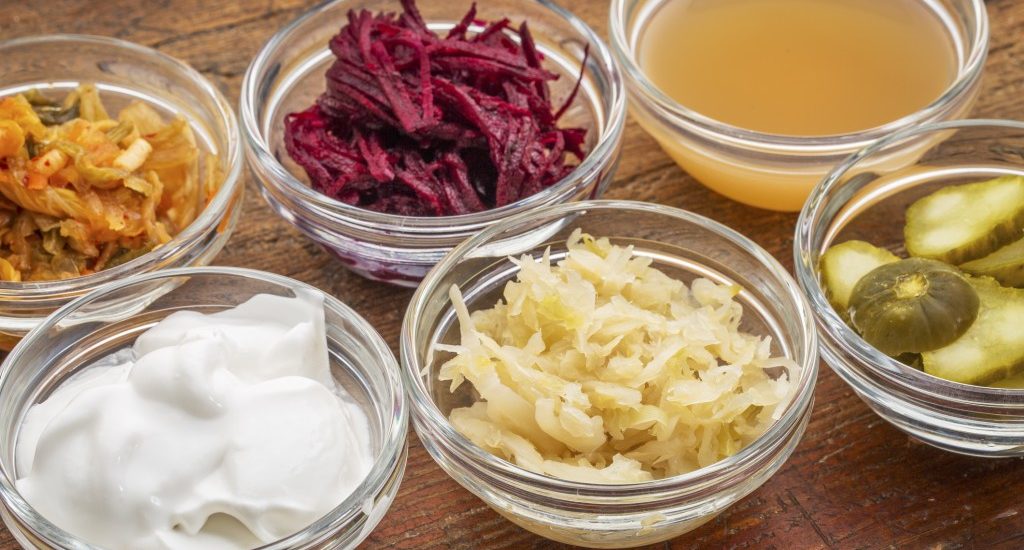
Fermentation has been used around the world for thousands of years to preserve foods and transform their flavors. During fermentation, microorganisms such as bacteria and yeasts break down components of food and produce organic acids, gases, alcohol, and other compounds. That transformation gives us foods as wonderfully diverse as yogurt, kefir, kimchi, sauerkraut, miso, tempeh, and many traditional fermented vegetables.
What makes the subject especially interesting today is what researchers are discovering about the relationship between fermented foods and the microorganisms that live in and on our bodies.
Scientists are studying how fermented foods may influence the gut microbiome, immune function, and metabolism. Fermentation may also change the availability of certain nutrients and produce bioactive compounds that weren’t present—or weren’t as accessible—in the original food.
There’s still much to learn, and different fermented foods can contain very different microorganisms and compounds. But it’s exciting to see modern science investigating foods that have been part of traditional diets for centuries.
 Fermented Doesn’t Always Mean Probiotic
This is an important distinction. We often hear the words fermented and probiotic used interchangeably, but they don’t mean exactly the same thing.
A fermented food is made through the desired activity of microorganisms. A probiotic, however, is a specific live microorganism that has been shown to provide a health benefit when consumed in an adequate amount. That means a fermented food isn’t automatically a probiotic food.
Some fermented foods—such as certain yogurts, kefir, refrigerated sauerkraut, kimchi, and other unheated fermented vegetables—may contain live microorganisms when you eat them. Others may no longer contain live cultures because they’ve been heated, baked, filtered, or pasteurized. Sourdough bread, for example, is fermented, but baking kills the microorganisms responsible for the fermentation.
That doesn’t make these foods unhealthy. Fermentation can change food in other potentially beneficial ways, and researchers are increasingly interested not only in the microorganisms themselves but also in the compounds they leave behind.
What Should You Look for at the Grocery Store?
If you’re specifically looking for fermented foods that contain live cultures, read the label. With yogurt or kefir, look for language indicating live and active cultures.
For sauerkraut, kimchi, and fermented pickles, the refrigerated section is often a good place to start. Check the ingredient list and package for references to live cultures or natural fermentation. And remember: vegetables simply preserved in vinegar aren’t necessarily fermented. They’re still a delicious way to eat more vegetables, but they’re not the same thing.
Fermented Foods Around the World
One of the things I love about fermentation is how beautifully it illustrates our connection through food. Korea has kimchi. Japan has miso and natto. Indonesia has tempeh. Germany is famous for sauerkraut. Yogurt and kefir have long histories across parts of Europe, Central Asia, and the Middle East. And throughout the Philippines, families have their own versions of atchara.
Different ingredients. Different traditions. Different flavors. But behind them is the same wonderfully human idea: taking what is available, preserving it, transforming it, and sharing it around the table.
 Don’t Forget to Feed Your Gut, Too
If you’ve been following my 30 Plants a Week Challenge, fermented foods give us another interesting piece of the gut-health puzzle. Eating fermented foods doesn’t replace eating plenty of fiber-rich plant foods. I like to think of the two as partners. Vegetables, fruits, beans, whole grains, nuts, seeds, herbs, and spices provide different types of fibers and plant compounds. Some of those fibers serve as food for microorganisms already living in our digestive tract.
Fermented foods bring something different to the table—live microorganisms in some cases, along with compounds created during fermentation. So rather than searching for one miracle food for your microbiome, keep coming back to something beautifully simple variety.
Grace’s Fermented Food Challenge
This week, try adding one fermented food to a meal you already enjoy. Spoon plain yogurt over berries and nuts for breakfast. Add a little kimchi alongside a grain bowl. Whisk miso into a salad dressing. Try kefir in a smoothie. Serve sauerkraut alongside your favorite protein. Or try something that’s very close to my heart, my family’s, Atchara recipe.
The combination of crisp green papaya, carrots, ginger, garlic, and that wonderful sweet-and-sour flavor takes me right back to the kitchen with my mother. Food has a remarkable way of doing that. What begins as nourishment can also become tradition, memory, and a connection between generations. And perhaps that’s one reason I’m so happy to see fermented foods being rediscovered today. Science may be giving us new reasons to appreciate them, but families around the world have understood their value—and enjoyed their wonderful flavors—for a very long time.